Asexual reproduction
The guide also covers vegetative reproduction, where new trees are produced without sexual pollination.
The three examples given are layering, suckering, and cuttings. New trees produced this way are genetically identical to the parent tree.
This matters both in natural recovery and in practical propagation, including conservation and disease-resistance work.
Three main methods
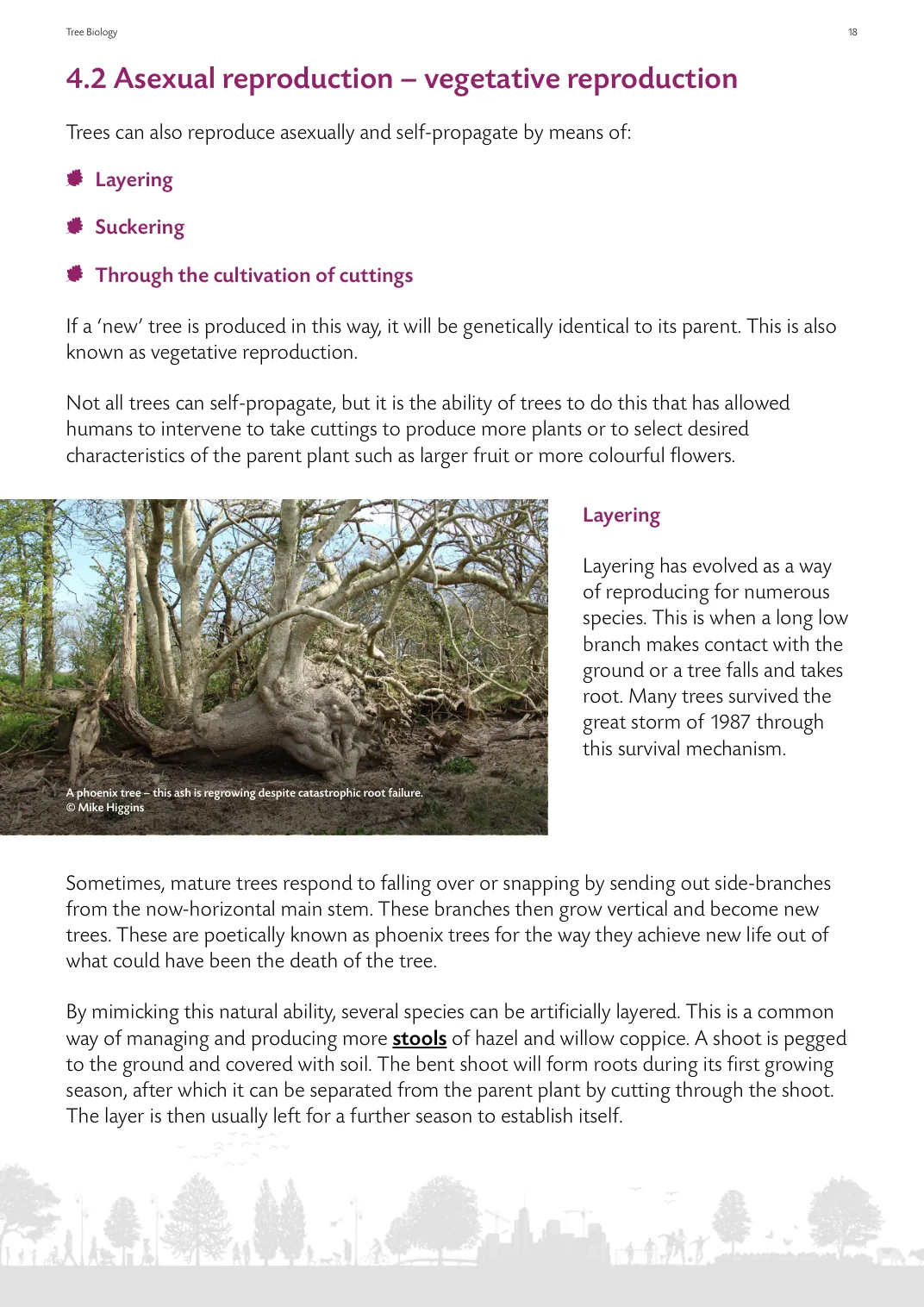
Layering
A low branch reaches the ground, roots, and eventually becomes a new tree. The guide also describes artificial layering by pegging a shoot down and covering it with soil.
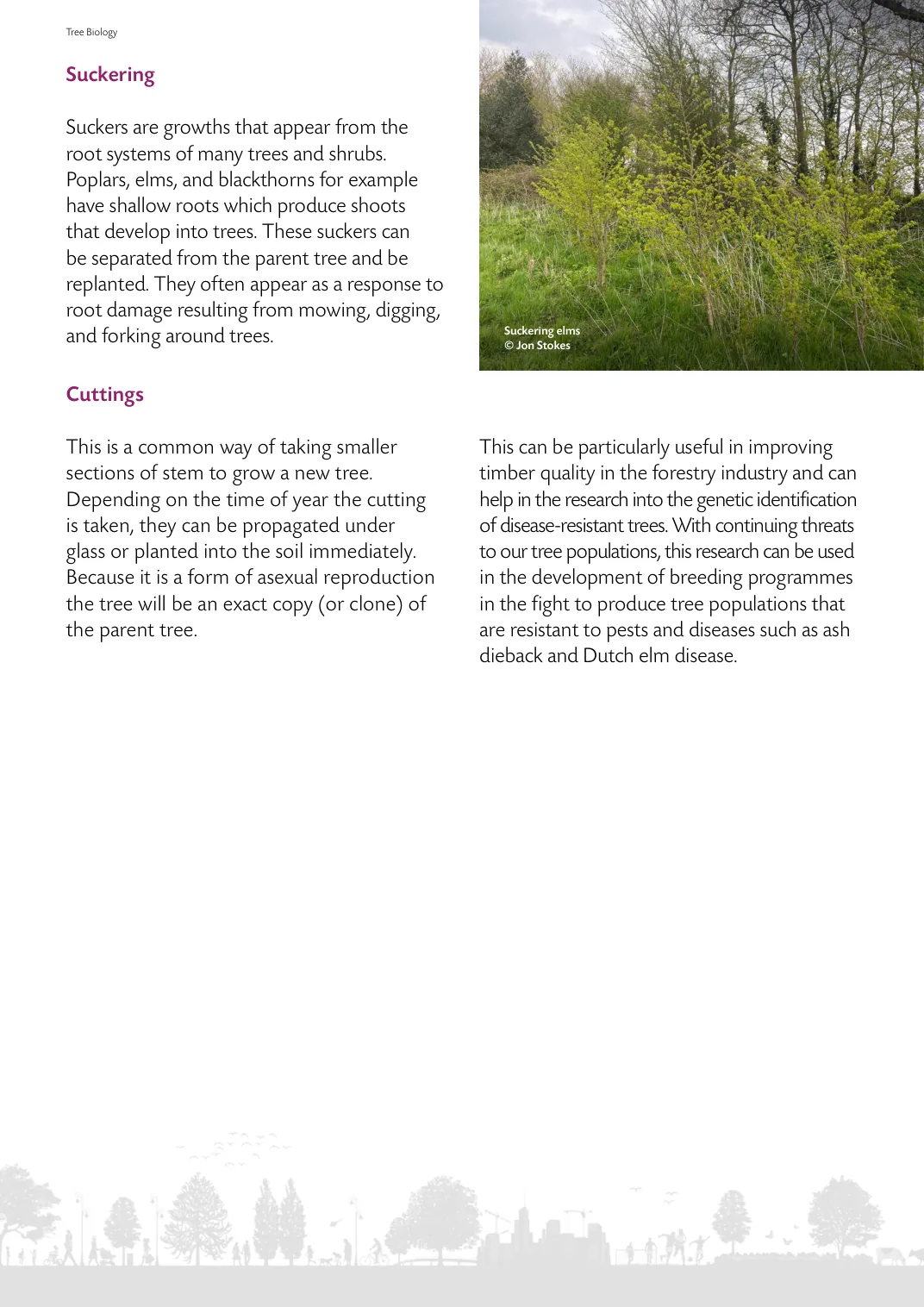
Suckering
New shoots arise from the root system. These can sometimes be separated and replanted.
Cuttings
Small stem sections are propagated to create clones of the parent tree.
Why it is useful
Vegetative reproduction allows people to preserve desirable characteristics, increase stock, improve timber quality, and support breeding work for disease resistance.
Key takeaway
Asexual reproduction produces clones, which makes it powerful for both natural persistence and human-led propagation.
Knowledge check
Why are trees produced by cuttings genetically identical to the parent?