Energy, ageing, and damage
The guide frames tree vitality as a balance between stored energy and active energy use.
Trees need stored energy in the form of starches as well as active energy for movement and growth. To stay healthy, the guide says a tree needs more stored energy than active energy.
Spring bud-break and autumn leaf-fall are especially demanding times. Environmental stress can push the stored-to-active balance toward survival mode.
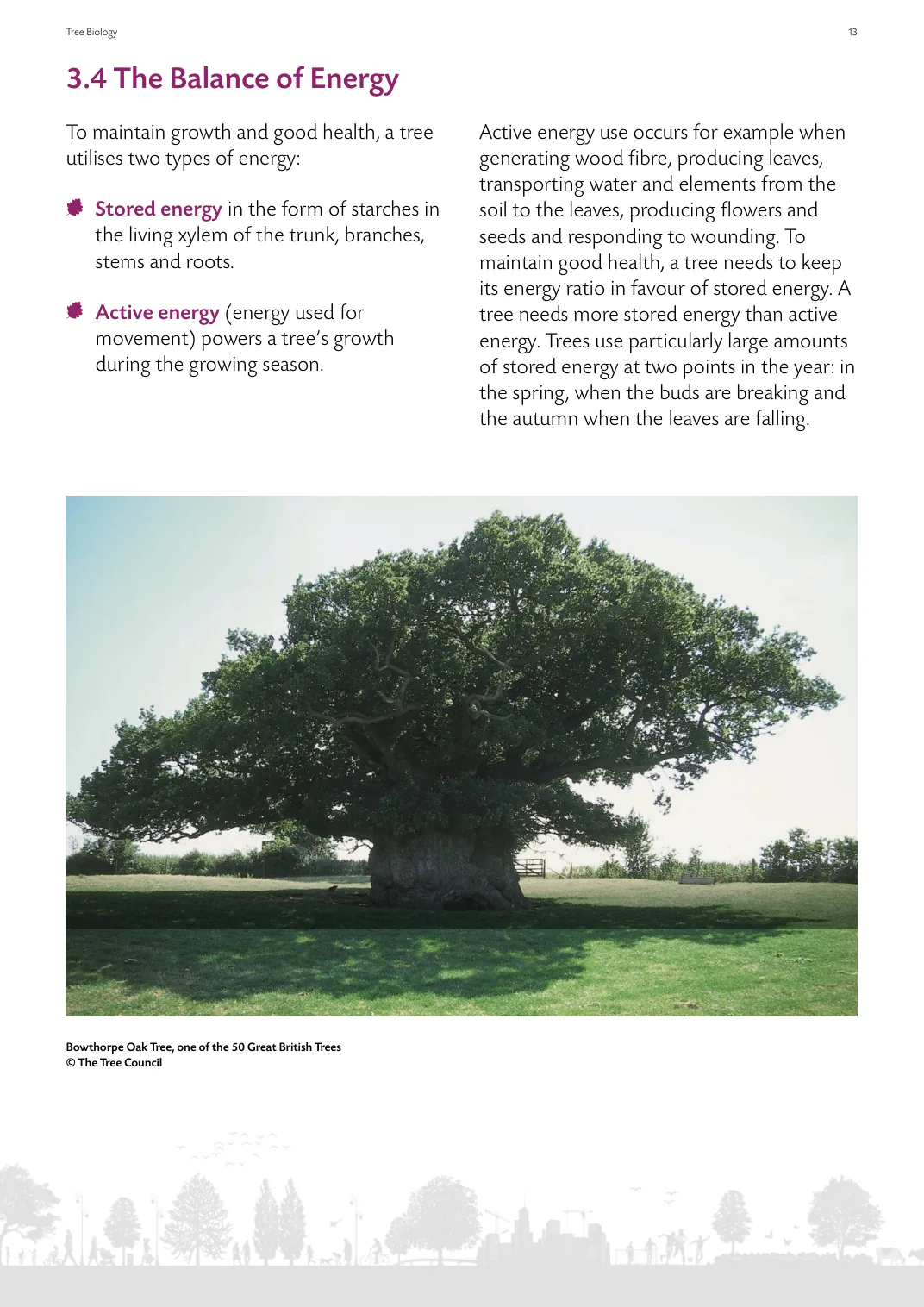
What changes with age
As a tree matures and becomes ancient, growth slows. The tree begins to prioritise protection and storage rather than trying to keep every part fully active.
Shaded inner branches may lose transport supply and become deadwood. Older trees may also retrench, reducing crown spread and transport distances as a survival strategy.
Damage response
Stored energy is also used to produce wound wood, or occlusion, which helps close over injuries and limit decay.
Signs that a younger tree is cutting back too early can include dieback, sparse leaves, and unusual deadwood formation.
Key takeaway
A tree often survives by reducing demands, not by trying to keep every part equally active forever.
Knowledge check
What is retrenchment?