How a tree functions - part 1
The guide highlights four key processes that let a tree function. The first two are photosynthesis and respiration.
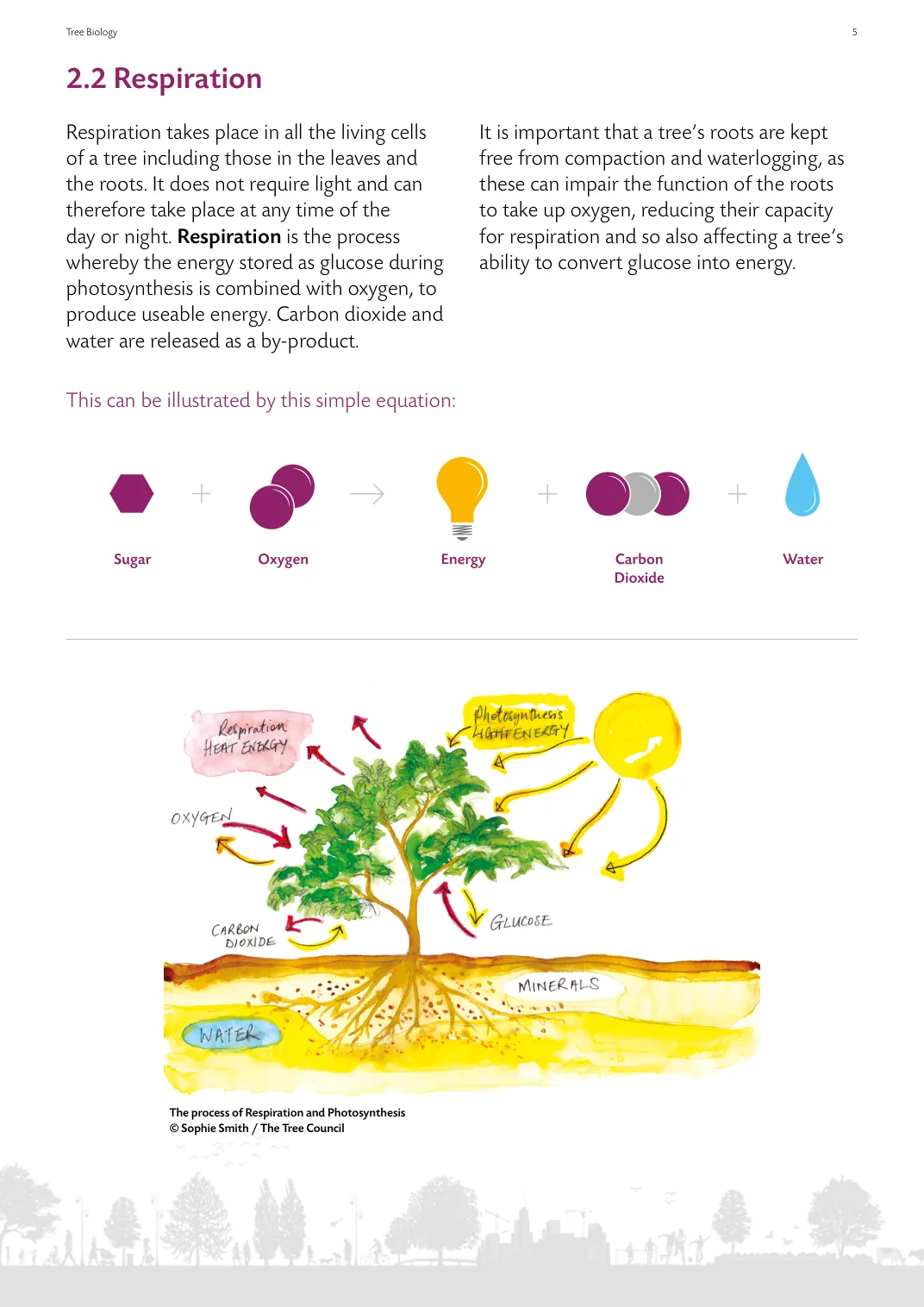
Photosynthesis happens in the leaves. Light energy, carbon dioxide, and water are turned into glucose, and oxygen is released. Some of that glucose is used straight away and some is stored for growth, defence, reproduction, and recovery.
Respiration happens in living cells across the tree, including the roots, and it does not need light. It uses glucose and oxygen to release usable energy, with carbon dioxide and water as by-products.
Photosynthesis
Leaves contain chloroplasts packed with chlorophyll. Chlorophyll absorbs sunlight, which drives the production of glucose. That glucose becomes the tree's fuel supply.
Respiration
Respiration converts stored sugar into usable energy. Because roots need oxygen for this, compacted or waterlogged soil can reduce their performance and affect the whole tree.
Why this matters in practice
When you see thin foliage, stressed roots, or slow recovery after damage, it often points back to energy supply. Healthy leaves make the fuel, but healthy roots are still needed to keep the system running.
Key takeaway
Photosynthesis makes the fuel. Respiration unlocks it.
Knowledge check
Why can respiration happen at night?