Bark, cambium, and wood
The bark and wood layers are not all doing the same job. The guide distinguishes protection, transport, growth, storage, and structural support.
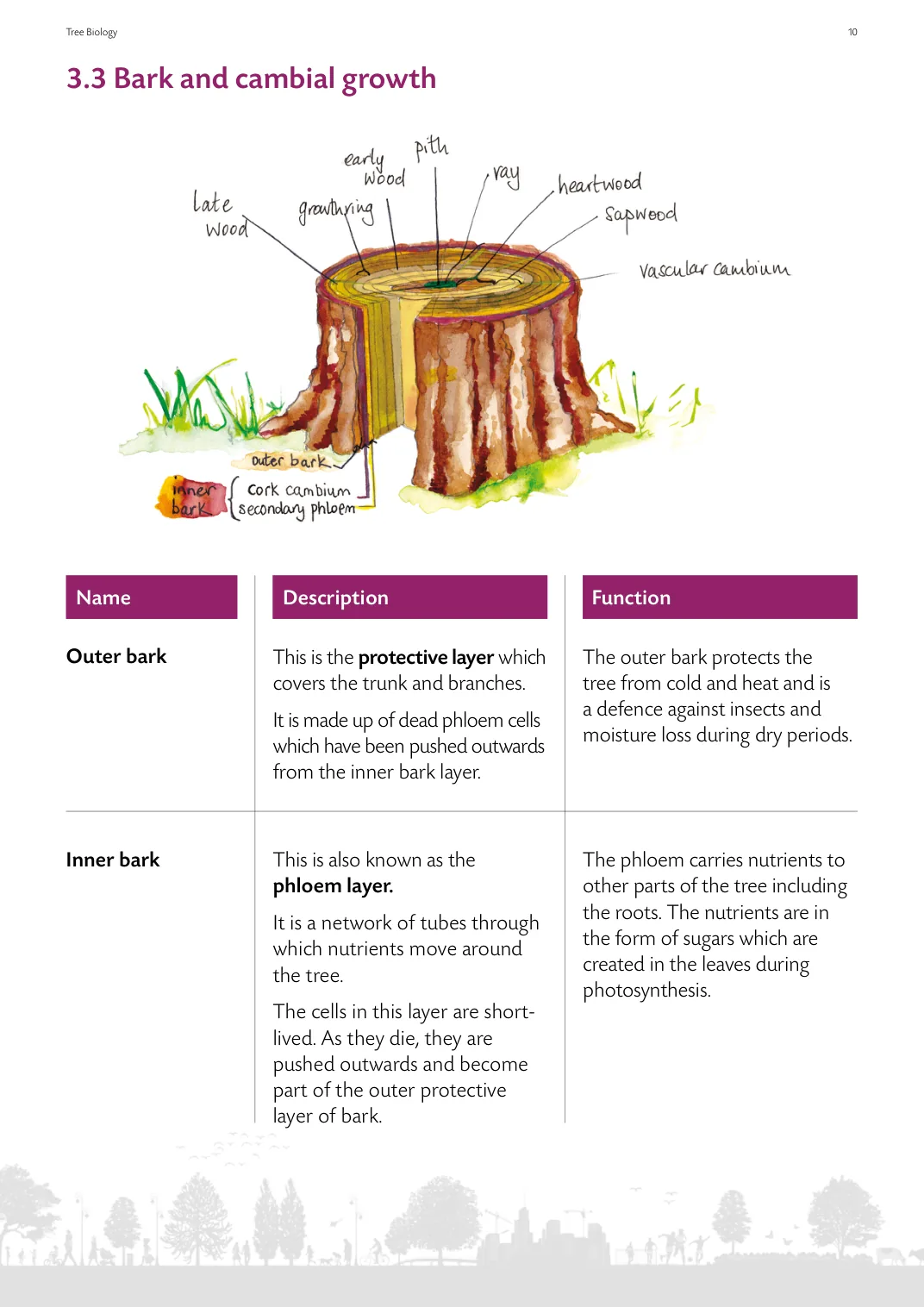
Outer bark protects the tree from heat, cold, insects, and moisture loss. Inner bark, or phloem, moves sugars and other nutrients around the tree.
The vascular cambium is the thin living growth layer that makes new phloem outward and new xylem inward. The xylem becomes sapwood and, later, heartwood.
Layer by layer
- Outer bark: protective shield
- Inner bark / phloem: nutrient transport
- Vascular cambium: growth layer that creates new tissues
- Sapwood: living xylem carrying water upward
- Heartwood: dead xylem forming the central structural core
Why bark damage matters
If the inner bark is badly damaged, the tree cannot keep producing new cells in that area. If the inner bark is removed in a complete ring around the trunk, the guide says the tree will die because transport to the upper parts is interrupted.
Key takeaway
The outer trunk may look like one solid thing, but it is made of specialised layers with very different roles.
Knowledge check
What is the cambium layer responsible for?